Location:
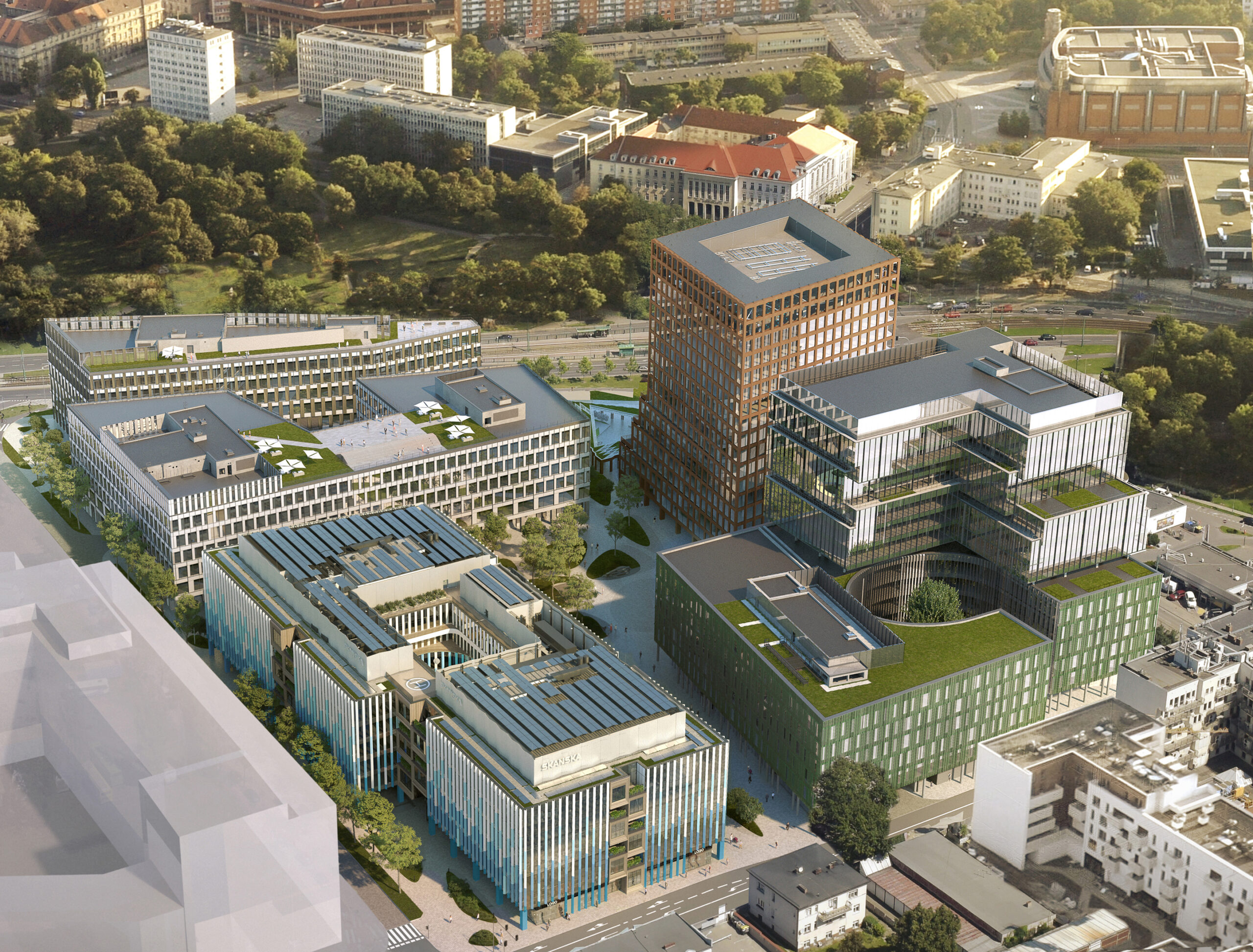
This is the last of the buildings Skanska is constructing on the New Market, so we thought it would be good if some trace - not literal, but symbolic - was left behind.
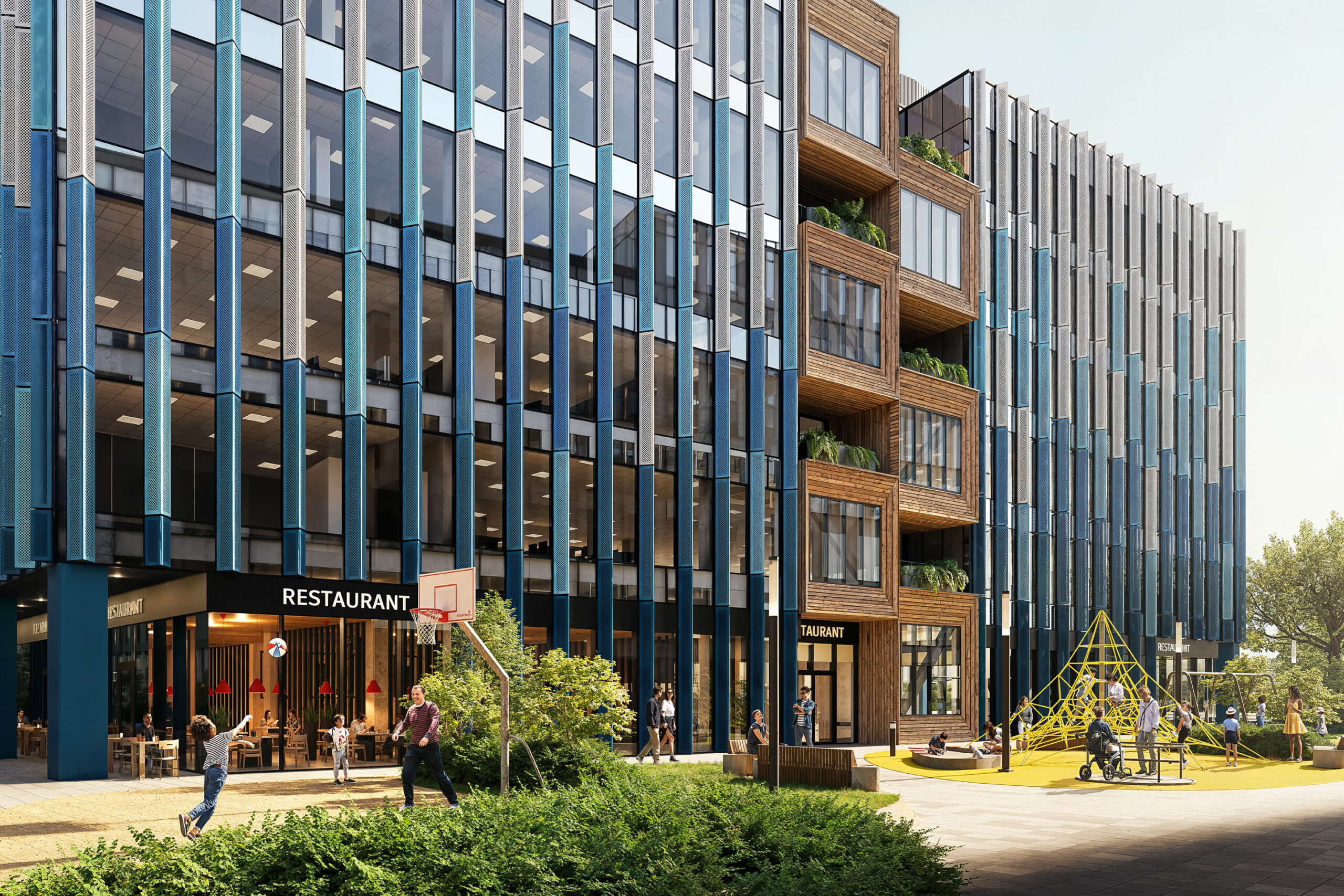
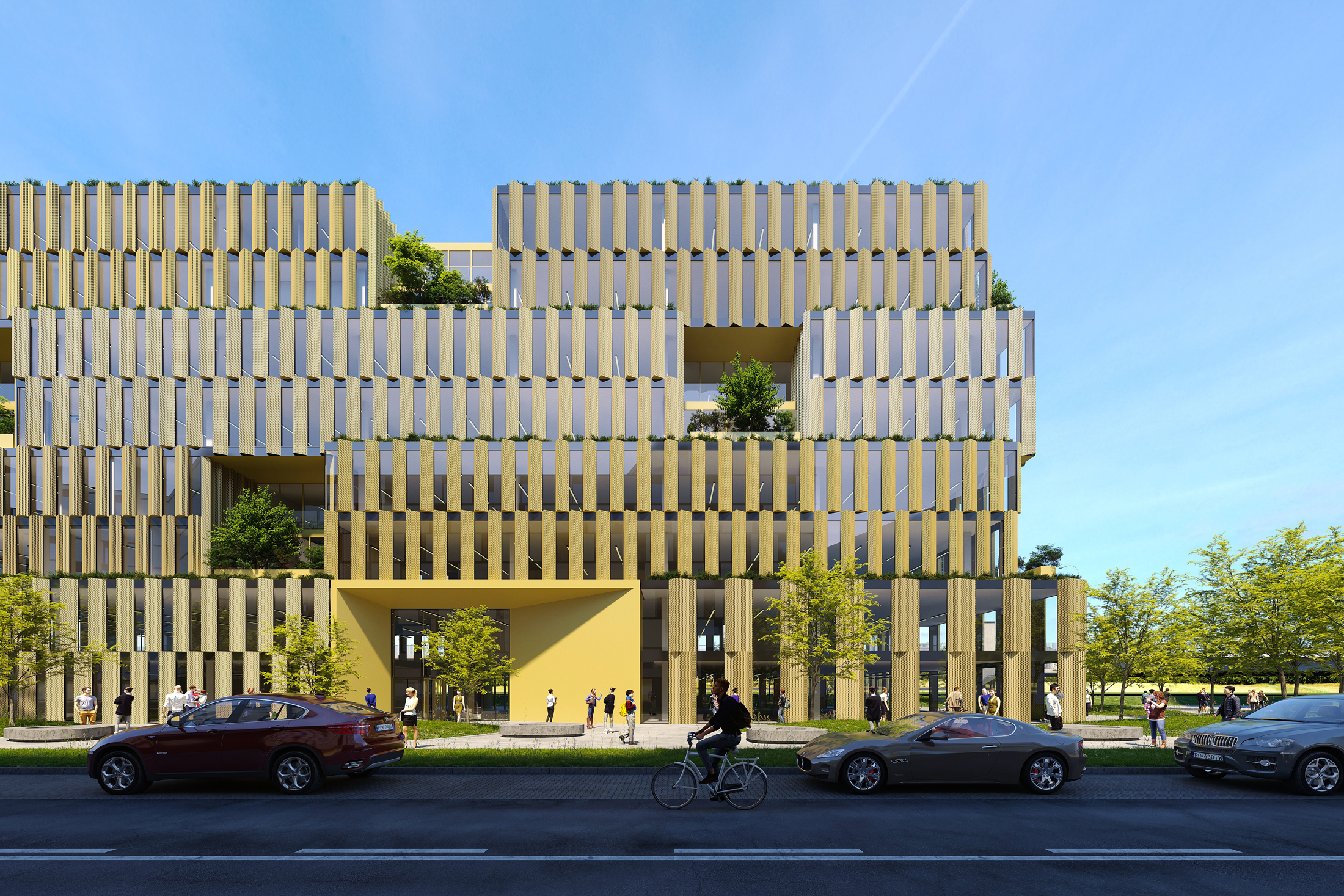
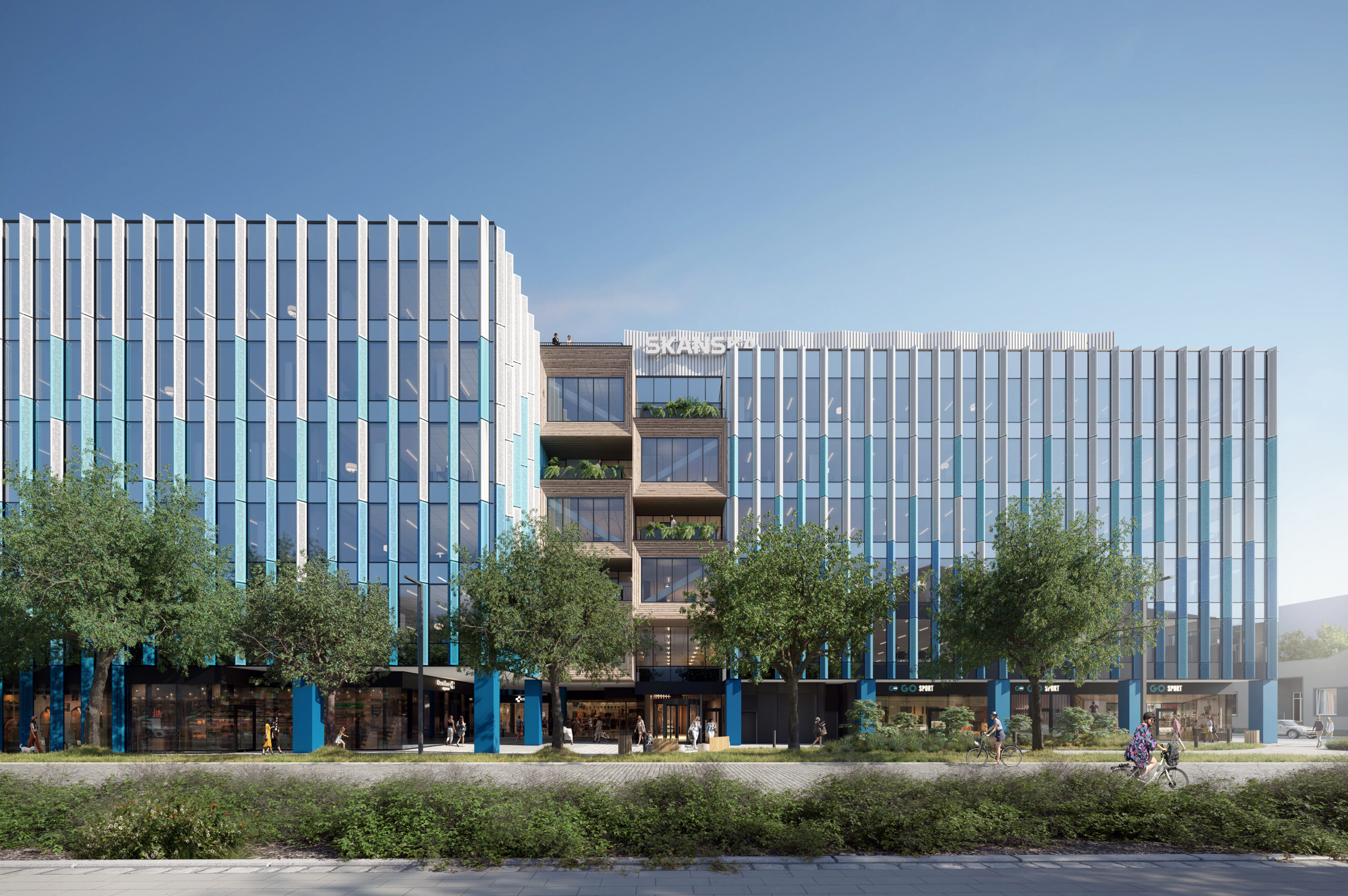
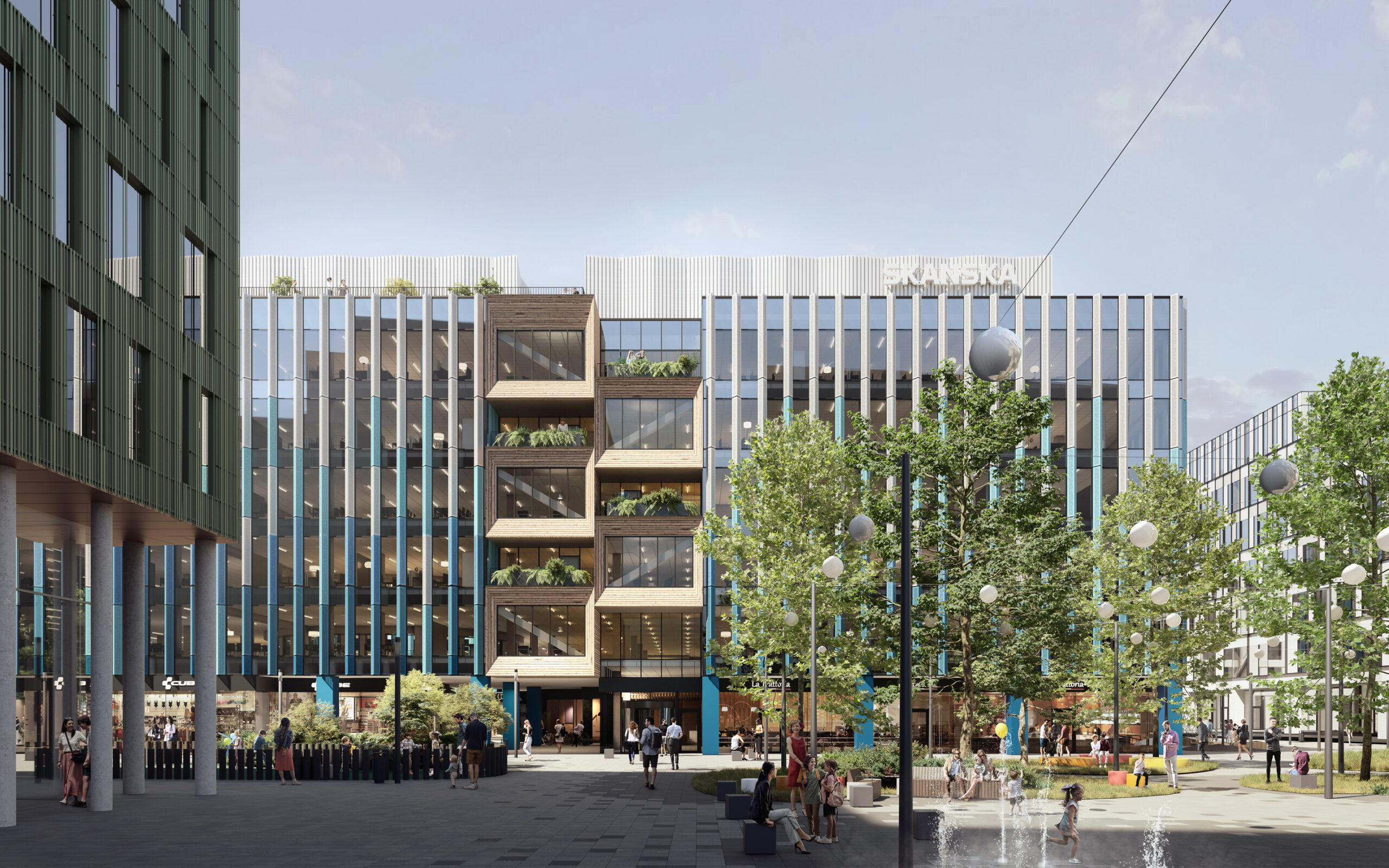
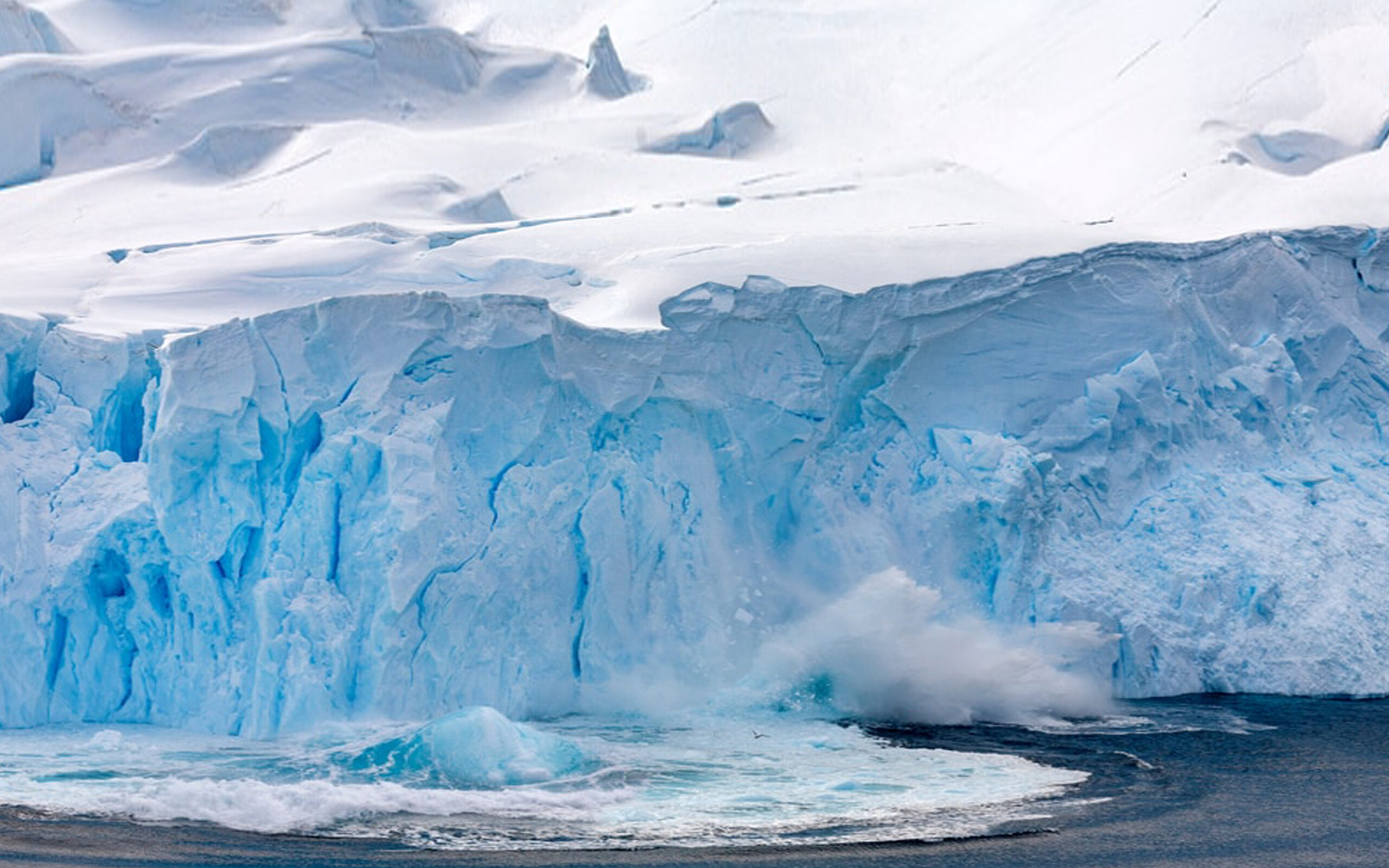
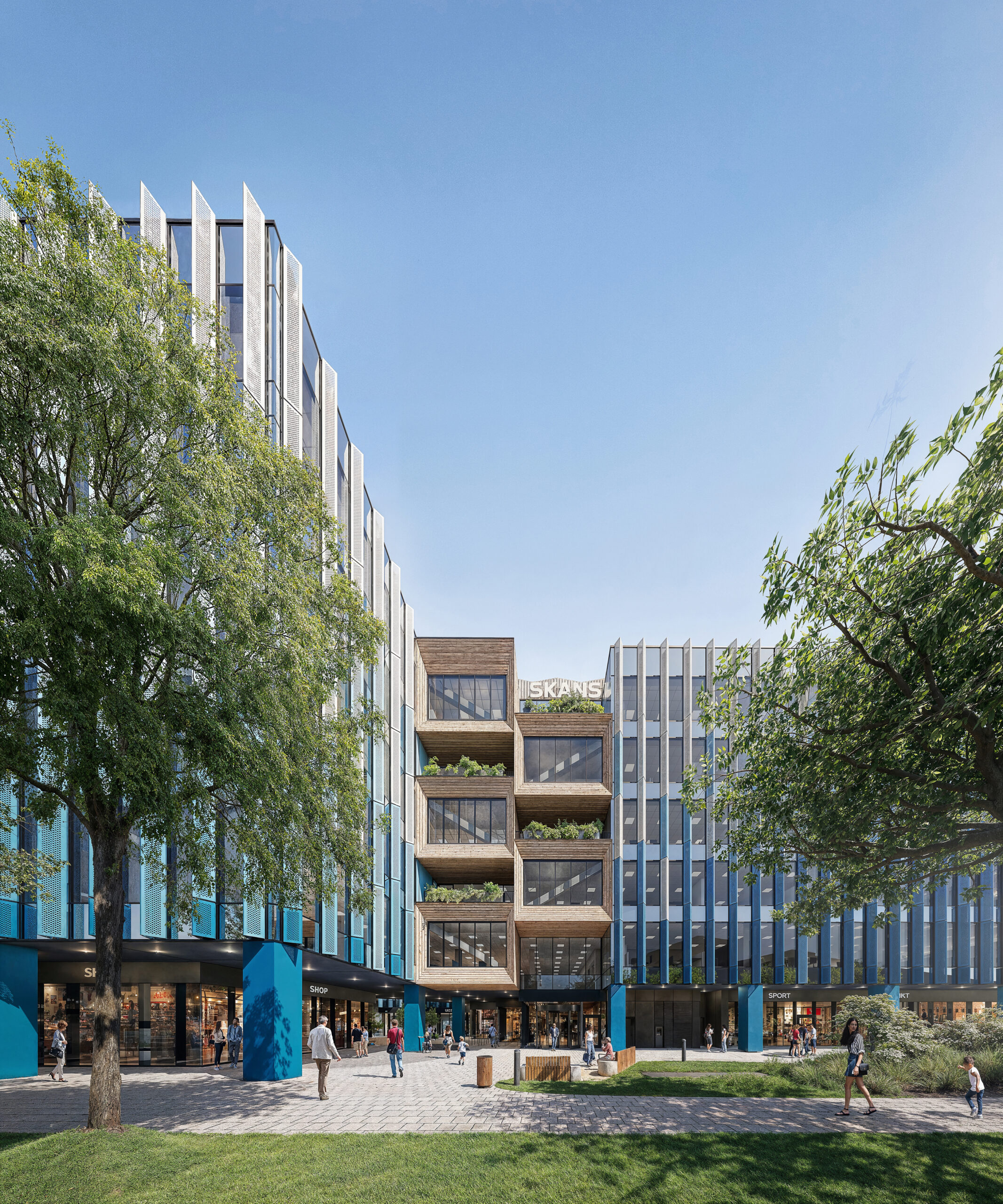
The very name of the company is distinctive and indicates its Scandinavian roots, so when designing the facility, we asked ourselves: what do we associate Scandinavia with? For us, it is primarily nature - lakes, mountains, forests, snow and glaciers. Therefore, when designing the latter office building, we proposed that its facade colors should resemble a glacier: blue turning to white towards the top.
Architecture:
This is a large building. The east and west elevations are more than 100 meters long, so we decided to divide them into shorter sections. The idea of what these interludes should look like is related to our earlier commission - a landscaping project for the entire New Market development.
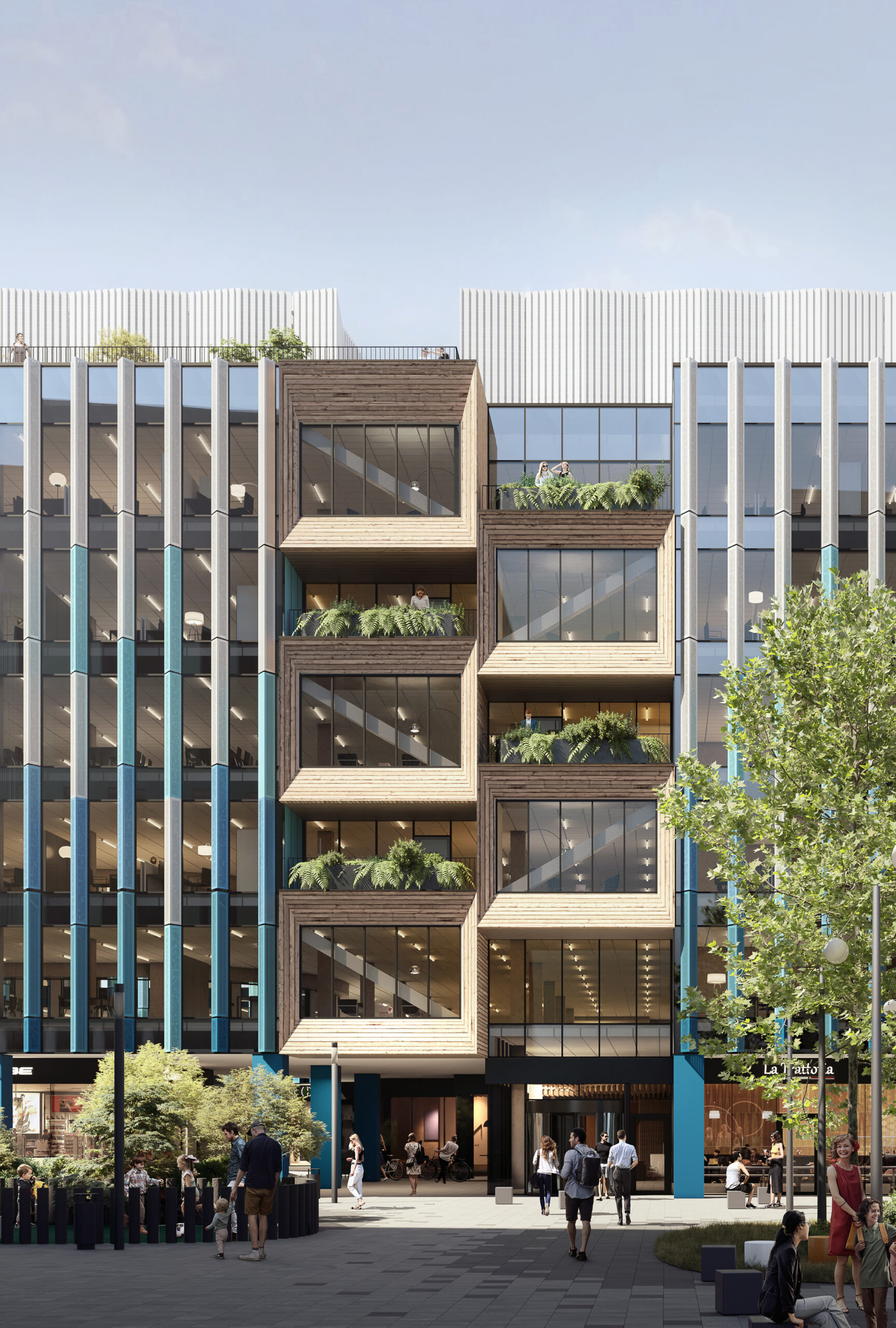
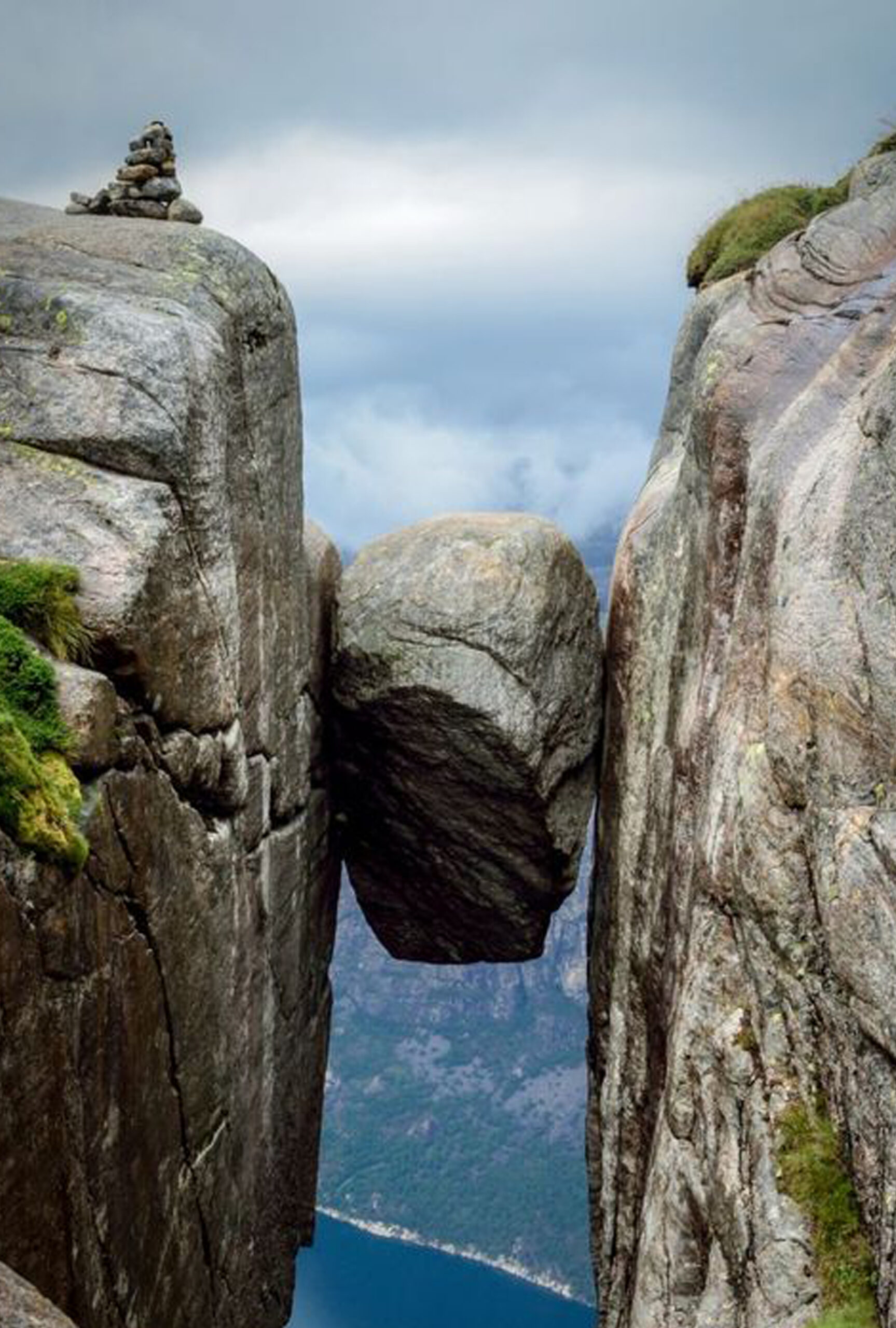
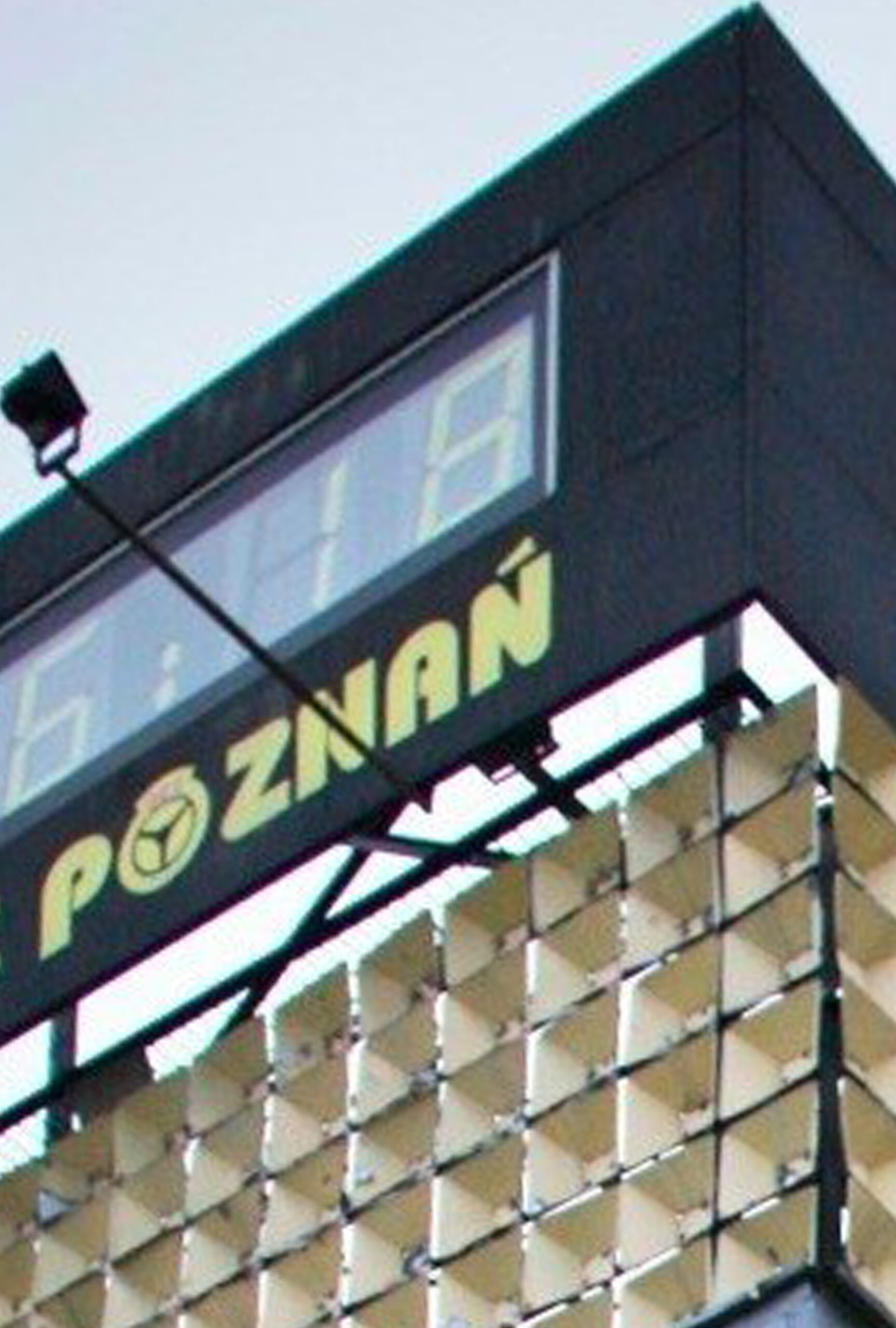
We started working on the development concept back in 2017, and it was a very interesting experience for us. During the implementation of earlier stages of the project, large boulders were found in the area. These boulders were brought from Scandinavia thousands of years ago by a glacier. They became the inspiration for shaping these facade accents. We wanted parts of the facade to look as if the building symbolizing the glacier carried them. By the way, it's worth mentioning that all of the excavated boulders can be found today incorporated into the New Market space. These façade fragments are also intended to create interesting spaces for office users - they are outdoor green terraces, and at the same time can become attractive parts of the interiors, places for relaxation and meetings. Their geometric form, meanwhile, is reminiscent of the former bus station building, which stood on this site for many years. Its facade was partially covered with characteristic coffers, resembling photo frames.
Details:
It is worth mentioning that the characteristic blue "razor blades" will be made of aluminum perforated sheet metal. They will protect the interiors from the sun, and at the same time hide the openable sections of the facade, allowing natural ventilation of the rooms without the use of ventilation and mechanical air conditioning.